Thames Water Leak Allowance: The Published Rules, the Evidence and How to Apply
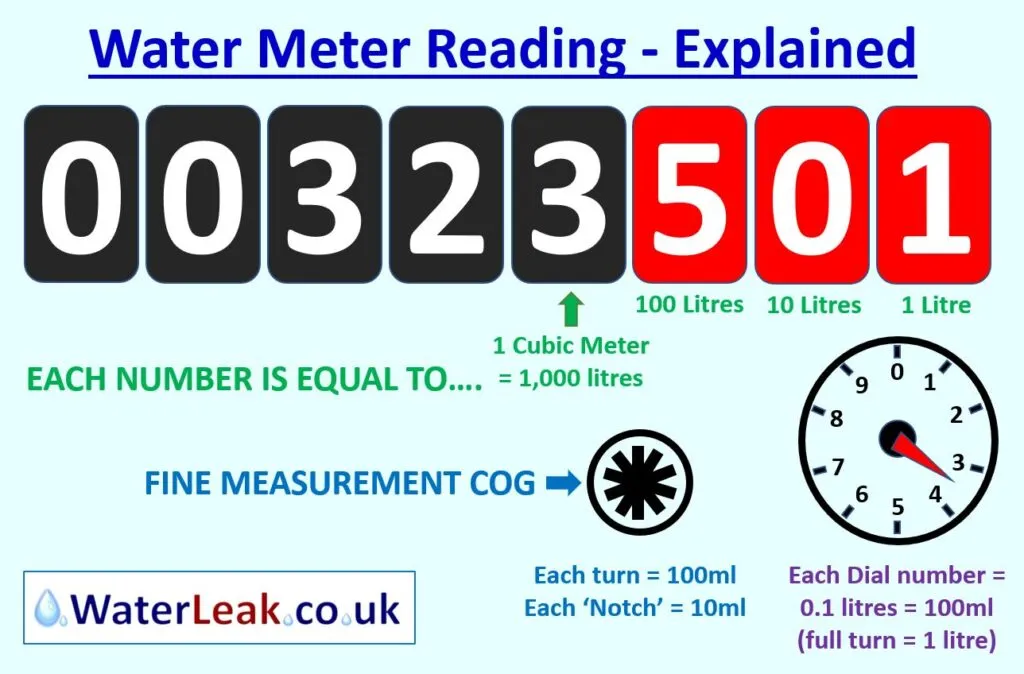
A leak allowance is a credit for water that went into the ground rather than into the property. Thames Water publishes the rules that govern it, and most refused claims fail on one of four conditions that are set out in advance.
What a leak allowance actually is
A leak allowance is not compensation and it is not a contribution towards the repair. It is a credit applied to a metered account for the cost of water that passed through the meter and escaped before it reached a tap. Thames Water describes the position plainly in its Household Customer Side Leakage Code of Practice: the meter records all water passing through it, including water lost through leaking pipes, so the bill will show wasted water alongside water you actually used, and the allowance exists so that you are not left out of pocket for the difference.
That framing matters because it sets the limit of what the scheme does. The detection work, the excavation, the plumber and the reinstatement are all outside it. If those costs are recoverable at all it will be through a buildings insurance trace and access extension or a home emergency policy, not through the water company. Thames Water's own guidance on arranging a repair says the first thing to do with any leak at home is to check your buildings insurance, and only to arrange the repair yourself if you are not covered.
Why unmetered customers do not need one
The allowance page opens with a conditional: if you have a water meter, a leak on your property could increase your bill. An unmetered charge is calculated from the rateable value of the property and does not move with consumption, so a leak does not inflate the bill and there is nothing for an allowance to credit. The exposure for an unmetered household is the damage and the repair, not the volume. It is also worth noting that a leak found on an unmetered supply still has to be repaired within the same four week window, because that obligation comes from waste of water rules rather than from billing, and because the Water Supply (Water Fittings) Regulations 1999 prohibit leaving a faulty fitting in use where it causes waste.
Thames Water's published eligibility rules
Thames Water sets out four conditions on its leak allowance page, and states that an allowance can only be issued if all of them are met. They are reproduced below as conditions rather than paraphrased, because each one has a practical trap in it.
| Published condition | What it means in practice |
|---|---|
| The leak is repaired within four weeks of Thames Water first notifying you, or of the leak being identified | The clock can start with their letter, not with your discovery. Diarise from the date on the notification |
| The repair can be confirmed with a plumber's details and invoice, or a Thames Water job number where they did the work | A cash job with no paperwork is not evidence. The invoice must identify the contractor |
| The leak was not fixed under Section 75 of the Water Industry Act | An enforced repair after a formal notice disqualifies the claim outright |
| The allowance is claimed within three months of the repair date, even if no bill has arrived yet | Waiting for the bill is the most common way of missing the deadline |
The mechanics are sequential. You complete the leak fixed form first so the company can update its records, then the leak allowance form. Thames Water asks that every part of the form is completed including the meter readings, and says that the more detail you give about the leak the more accurately and quickly it can work out the allowance. Your payment method and billing date continue as normal while the application is reviewed. If you are still establishing whether there is a leak at all, our guide to reading your water meter to check for a leak covers the isolation test the company itself describes.
What the code of practice excludes
The four conditions above are the published gateway. The exclusions sit in the code of practice, and they are the reason most contested claims fail. Thames Water lists three circumstances in which you may not be eligible.
The first is where the company previously advised you, or the former occupiers of the property, that the supply pipe needed replacing and that was not carried out. This is the one that catches purchasers, because the advice may have been given years before to somebody else and may not have been disclosed on a sale.
The second is that allowances are not usually made for leaks from pipework or fittings beyond your internal stopcock, except where, in the company's opinion, you could not reasonably have known about it. That exception is the whole battleground for internal leaks and it is discussed below.
The third is that no allowance will be made where the leak was caused by your negligence, or where you knew or should have known there was a leak and failed to repair it. Thames Water also says that where the published criteria are not met but there are exceptional circumstances, it will consider claims individually, and that all leak allowance claims are considered individually in any event.
| Situation | Allowance likely | Where the rule comes from |
|---|---|---|
| Buried supply pipe leak, repaired inside four weeks, invoice supplied | Yes | Published eligibility conditions |
| Concealed leak under a solid floor, unknown until the bill rose | Case by case, under the could not reasonably have known exception | Code of practice, internal pipework exclusion |
| Dripping tap or overflowing cistern left running | No | Beyond the internal stopcock, and knew or should have known |
| Supply pipe you were previously told to replace | No | Code of practice, prior advice exclusion |
| Repair carried out by Thames Water after a Section 75 notice | No | Published eligibility conditions |
| Claim submitted four months after the repair | No | Three month claim deadline |
Internal leaks and supply pipe leaks are treated differently
This is the single most useful distinction in the whole scheme and it is not on the main web page. The code of practice states that if you qualify, you can get a leak allowance for leaks on any internal pipework on one occasion, but that for leaks on your water supply pipe you can claim as many times as you need.
The asymmetry follows from what the company can reasonably expect you to control. A buried supply pipe, which Ofwat confirms the owner must detect, repair and replace, is not inspectable, may be lead or old galvanised steel, and can fail repeatedly along its length, which is why Thames Water prefers replacement to repeated repair. Internal pipework is visible, accessible and maintainable, so the company will underwrite a first failure and treat a second as a maintenance question.
Where the internal stopcock sits in the rule
The exclusion is drawn at the internal stopcock, not at the external wall. Everything downstream of that valve is internal pipework for the purposes of the allowance. That means the run between the boundary and the stopcock, which is usually the buried supply pipe and often the section that fails, sits on the favourable side of the line, while a failed joint under a kitchen floor two metres further on does not.
Establishing which side of the stopcock a loss sits on is therefore not a technicality but the difference between an unlimited entitlement and a single lifetime claim. It is the same isolation test described in who is responsible for a Thames Water leak: close the stopcock, read the meter, wait, read again. Continued movement places the loss upstream.
How the allowance is calculated
Thames Water's method is comparative rather than volumetric. Where the property has its own supply and meter, the company compares how much water you used in the past during a comparable period against the amount the meter recorded while the leak was running, calculates the difference in cost and credits that amount to your water and wastewater services account. Where there is no record of previous use, the adjustment is based on typical usage for a household of a similar type, and the code of practice says it can be further adjusted if your actual use turns out to be very different.
Two details are worth holding on to. The code of practice states that where you qualify, the allowance can be backdated to when the leak started, to a maximum of two years. And where Thames Water supplies your water but another company provides wastewater services, Thames Water says it will notify them so that an allowance can be applied to the wastewater account as well. A credit that only covers the clean water side is incomplete, and on a typical London bill the wastewater element is a substantial share.
| Circumstance | Basis of calculation | Limit stated |
|---|---|---|
| Own supply and meter, usage history available | Past use over a comparable period against metered use during the leak | Backdated to when the leak started, maximum two years |
| No record of previous use | Typical use for a similar household, allowing for property size and occupants | Adjustable if actual use differs materially |
| Wastewater billed by another company | Thames Water notifies them so an allowance can be applied | Applied to the wastewater account separately |
| Allowance felt to be too small | Review on request against normal use | Company reconsiders and gives a decision |
The evidence that gets an allowance approved
Thames Water names two documents. The code of practice asks you to enclose proof of repair where a third party fixed the leak, giving a plumber's invoice or insurance documents as the examples, and the eligibility conditions require either the plumber's details and invoice or a Thames Water job number. Beyond that the form asks for meter readings, and the company says the detail you provide affects both the accuracy and the speed of the assessment.
- The plumber's or contractor's invoice, showing the company name, the date of the repair and what was repaired.
- Meter readings from before, during and after the leak, with dates against each. The company states it compares readings from before, during and where available after the repair.
- The date you were notified, or the date you identified the leak, since the four week window runs from whichever came first.
- Where the leak was hidden, anything that fixes the date it became detectable rather than the date it started.
- A certificate of water regulations compliance from the plumber, which Thames Water asks for in any event after work on a supply.
Why a detection report helps although it is not on the list
A leak detection report is nowhere in Thames Water's published requirements, and a claim can be approved without one. It earns its place in two situations. The first is the internal pipework exception, where the question is whether you could reasonably have known about the leak; a survey that records a concealed escape under a screed with no surface evidence answers that question in a way an invoice cannot. The second is the backdating question, where the company is deciding how far back an allowance runs and needs something that indicates when the escape began rather than when it was noticed. Our note on telling whether a leak is new or old covers the physical evidence that bears on that.
It also protects the four week window. A leak that cannot be found cannot be repaired, and the fastest route from notification to invoice on a buried pipe is usually a survey rather than exploratory excavation. Our underground leak detection service is built around exactly that timeline.
If the allowance is refused or comes back too small
Thames Water builds a review step into its own process. The code of practice says that if, after the bill has been adjusted, you do not feel the allowance accurately reflects the difference between what you would normally have used and what the meter recorded because of the leak, you should say so, and the company will review the allowance and give you its decision. That is the first move and it is often sufficient, particularly where the comparison period chosen included an unusual quarter.
Where the criteria were not met but the circumstances were genuinely exceptional, the code of practice invites you to say so and states that all claims are considered individually. A tenancy change, a property left empty, a leak that only became detectable when a floor was lifted for unrelated reasons: none of these are in the published rules, and all of them are the sort of thing that a written explanation attached to the form is there to carry.
Escalating to the Consumer Council for Water
- Use Thames Water's own complaints process first. The company undertakes to respond to written queries and complaints about a bill or service within ten working days.
- If you are not satisfied with the outcome of the first two stages, or the issue is more than eight weeks old, the code of practice names the Consumer Council for Water as the independent voice for water consumers in England and gives its contact route.
- Keep the chain of dates intact: notification, repair, invoice, allowance application, decision. The four week and three month periods are the only two numbers anyone will argue about.
Finally, keep the allowance and the underlying problem separate in your own mind. The credit deals with the water; it does not deal with a supply pipe that has now failed once and may fail again, and it does not deal with damage inside the building. Where a high bill is the only symptom and nothing has surfaced, the sequence set out in checking a high Thames Water bill for a hidden leak is the right place to start before any form is filled in.
How we help with this
If the article describes a problem you actually have, these are the visits that deal with it.
- our full guide to leak detection
How each method works and when it is the wrong tool for the job.
- leak detection in London
Finding a hidden leak without opening the property up first.
- trace and access surveys
The survey and written report an insurer or loss adjuster asks for.
Frequently asked questions
Who can claim a Thames Water leak allowance?
Metered customers. Thames Water's leak allowance page opens by tying the scheme to having a water meter, because the meter records all water passing through it including water lost to a leak. An unmetered charge is based on rateable value and does not move with consumption, so a leak does not inflate the bill and there is nothing to credit. Tenants should check the tenancy agreement for who is responsible for repairs, then apply once the leak has been fixed.
What are the deadlines for a leak allowance claim?
Two, and they run consecutively. The leak must be repaired within four weeks of Thames Water first notifying you or of the leak being identified, whichever came first. The allowance must then be claimed within three months of the repair date, and Thames Water states this applies even if you have not received a water bill yet. Waiting for the bill to arrive before applying is the most common reason a claim falls outside the window, because a quarterly bill can easily land after the three months have run.
How many times can I claim a leak allowance?
It depends which side of the internal stopcock the leak was on. Thames Water's leakage code of practice states that where you qualify you can get an allowance for leaks on any internal pipework on one occasion, but for leaks on your water supply pipe you can claim as many times as you need. The reasoning is that a buried supply pipe cannot be inspected and may fail repeatedly, whereas internal pipework is visible and maintainable, so a first failure is underwritten and a second is treated as maintenance.
Will a dripping tap or a running toilet qualify?
Almost certainly not. Thames Water's code of practice says allowances are not usually made for leaks from pipework or fittings beyond the internal stopcock, except where in the company's opinion you could not reasonably have known about it, and separately that no allowance will be made where you knew or should have known there was a leak and failed to repair it. A visible drip and an audible cistern both fail that test. A concealed escape under a solid floor with no surface evidence is the situation the exception was written for.
How far back can an allowance be applied?
Thames Water's code of practice states that if you qualify for the allowance it can be backdated to when the leak started, to a maximum of two years. The calculation compares your use over a comparable earlier period against the volume the meter recorded during the leak, and where no history exists it is based on typical use for a similar household allowing for property size and occupancy. If Thames Water supplies water but another company handles wastewater, Thames Water says it will notify them so an allowance is applied there too.
What can I do if the allowance is refused or looks too low?
Ask for a review first. The code of practice invites you to say so if the adjusted bill does not reflect the difference between your normal use and the metered volume, and commits the company to reviewing the allowance and giving a decision. It also says claims outside the published criteria will be considered individually where there are exceptional circumstances. Beyond that, use the complaints process, then the Consumer Council for Water, which the code names as the independent body once an issue is over eight weeks old.