Overflow Pipe Dripping Outside: What the Pipe Is Actually Telling You
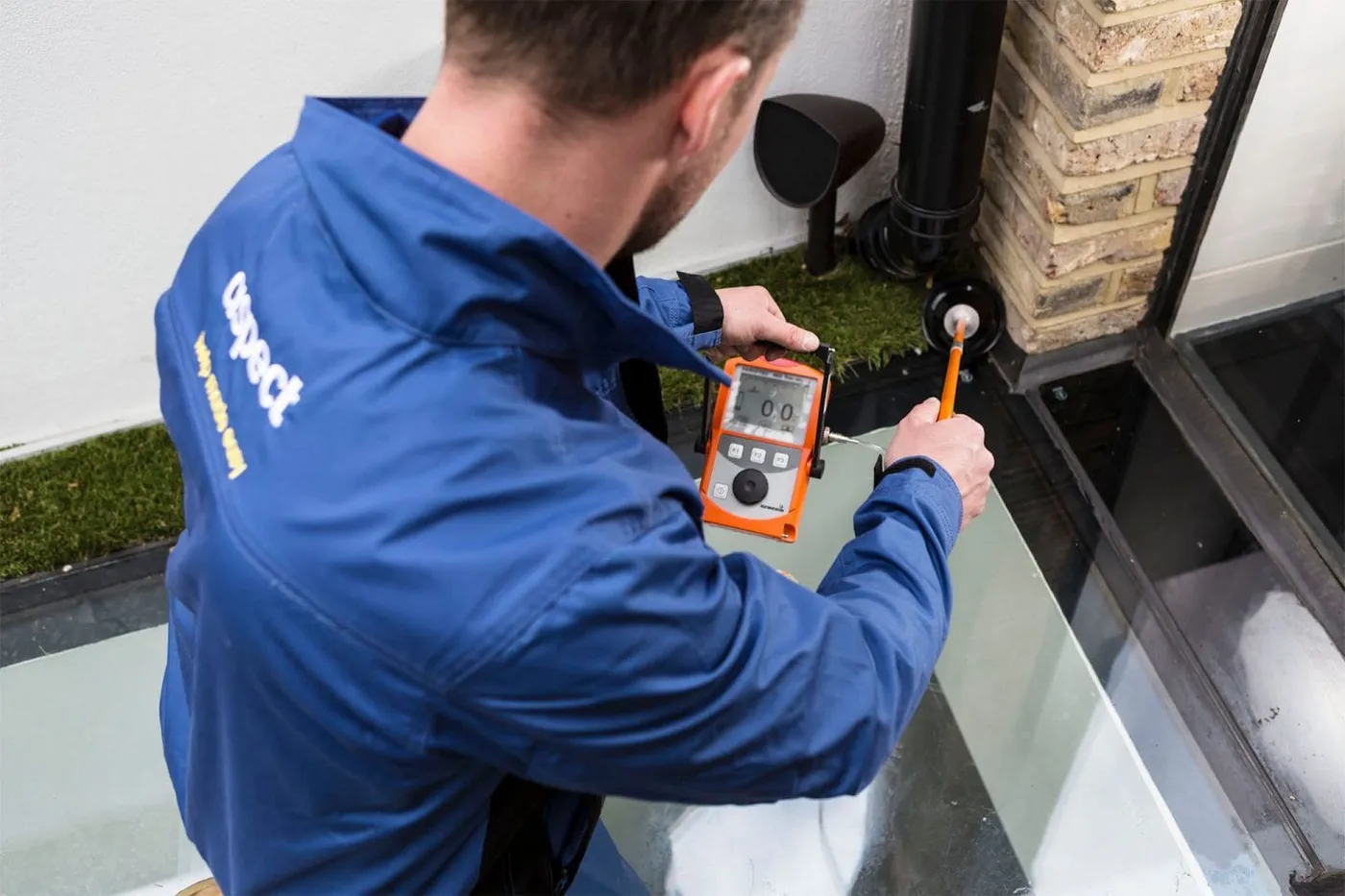
A warning pipe discharging in a conspicuous position is not a fault in itself. It is a designed alarm, and it is telling you that a valve somewhere inside the building has stopped closing.
The pipe is doing its job
An overflow pipe that runs water down an external wall is not the problem. It is the alarm. Something inside the building is admitting more water than it should, and the pipe exists precisely so that the excess leaves the building visibly rather than accumulating in a loft, a cupboard or a ceiling void.
The legal term for it is a warning pipe. Schedule 2 of the Water Supply (Water Fittings) Regulations 1999 defines a warning pipe, at paragraph 25(7), as an overflow pipe whose outlet is located in a position where the discharge of water can readily be seen. Paragraph 16(4) requires that every storage cistern be fitted with an overflow pipe, with a suitable means of warning of an impending overflow, which excludes insects. The position of the outlet is not an accident of plumbing; it is a design requirement, chosen so that a failure announces itself.
That framing matters because it changes the question. The right question is not how to stop the pipe dripping. Blocking it would simply convert a visible discharge into a hidden one, and the next thing you would see is a ceiling. The right question is which fitting upstream has failed.
Identifying which pipe is dripping
Most London properties have more than one pipe emerging through an external wall, and they are not interchangeable. What the discharge is, and how urgent it is, follows from which pipe it is coming out of.
| Pipe | Where it emerges | What it serves | What a discharge means |
|---|---|---|---|
| Warning pipe from a cold water storage cistern | High on the wall, at eaves or gable level | The loft tank feeding taps or the hot cylinder | The float operated valve is not closing |
| Warning pipe from a feed and expansion cistern | High on the wall, often a smaller cistern | An open vented heating system | Float valve failure, or the system is pushing water back up the vent |
| Warning pipe from a WC cistern | Low, near a bathroom or cloakroom | A traditional WC with an external overflow | The fill valve is passing |
| Tundish discharge pipe, unvented cylinder | Terminating low, often over a gully | An unvented hot water cylinder | Expansion vessel or relief valve fault, or overheating |
| Boiler pressure relief discharge | Small copper pipe near the boiler, turned down | A sealed system boiler | Overpressure, usually a failed expansion vessel |
| Condensate pipe | Plastic, from a condensing boiler | Flue gas condensate | Normal operation, unless it is continuous and clear |
The overflow you cannot see from outside
Modern close coupled WCs mostly do not have an external overflow at all. Instead the fill valve overflows internally, into the pan, which means a failed valve produces a permanent faint trickle down the back of the pan and no external sign whatsoever. This is one of the largest sources of unnoticed metered water loss in a domestic property, and it is invisible unless you look for it. A dry pencil line or a square of toilet paper on the porcelain at the back of the pan will show movement within a few minutes. Our guide to fixing a leaking toilet cistern covers the diagnosis and the usual failures.
What has actually failed inside
Almost every overflow discharge traces back to one of a small number of components, and the symptoms distinguish between them reasonably well.
| Component | How it fails | How to confirm it | Who should deal with it |
|---|---|---|---|
| Float operated valve washer or diaphragm | Perishes or scores, so the valve never fully seats | Flow continues when the float is lifted by hand | Competent owner or plumber |
| Float | Takes on water through a split, so it stops rising far enough | Flow stops cleanly when the float is lifted; the float feels heavy | Competent owner or plumber |
| Valve arm or level adjustment | Set so the valve closes above the overflow outlet | Water level sits at or above the warning pipe inlet | Plumber |
| Sealed system expansion vessel | Loses its air charge, so pressure climbs as the system heats | Gauge normal cold, rising steeply when the heating runs | Heating engineer |
| Boiler pressure relief valve | Debris on the seat, or the valve passes after operating | Discharge continues after the pressure fault is corrected | Heating engineer |
| Unvented cylinder expansion arrangement | Vessel or internal air bubble fails | Tundish discharges during hot water reheat | Registered unvented installer only |
| Temperature relief valve on an unvented cylinder | Operates because a thermostat or thermal cut out has not | Very hot water or steam at the tundish | Isolate and call a registered installer |
Float operated valve failures
A float operated valve closes against the incoming supply as the water level rises. Schedule 2, at paragraph 16(1), requires an effective adjustable valve on the pipe supplying a storage cistern. Three things stop it closing. The washer or diaphragm perishes or becomes scored, so the valve never fully seats and passes a small flow continuously. The float itself takes on water through a split or a failed seal, so it no longer rises enough to close the valve. Or the arm has been bent or the adjustment disturbed, so the valve closes at a level above the overflow.
The distinguishing sign is the rate. A perished washer usually gives a persistent slow drip that continues regardless of water use. A waterlogged float gives a heavier and more variable discharge, often worse after a period of high demand when the cistern has refilled hard.
Sealed system and unvented cylinder faults
A discharge from a boiler pressure relief pipe or an unvented cylinder tundish is a different category, because it indicates that a safety device has operated. Schedule 2, at paragraph 19, requires that discharges from relief valves be made in a safe and conspicuous manner, which is why these pipes terminate where they can be seen.
On a sealed heating system, water leaving the pressure relief valve nearly always means the expansion vessel has lost its air charge, so the system has nowhere to expand into as it heats and the pressure climbs past the valve setting. The tell is a gauge that sits normal when cold and climbs steeply when the heating runs. That pattern is covered in more depth in boiler pressure problems and their causes, because the same failure eventually presents as pressure loss once enough water has been expelled.
On an unvented cylinder the equivalent failure is the expansion vessel or the internal air bubble, and discharge at the tundish during a heating cycle points there. Discharge from the temperature relief valve rather than the expansion relief valve is a more serious matter, because it means a thermostat or thermal cut out has not operated. That is not a wait and see fault.
- Persistent slow drip from a high level pipe, unrelated to water use: float valve washer or diaphragm.
- Heavier discharge after heavy use, from a high level pipe: waterlogged float, or an incorrectly set arm.
- Discharge only while the heating is running: expansion vessel on the sealed system.
- Discharge at a tundish during hot water reheat: unvented cylinder expansion arrangement.
- Discharge from a feed and expansion cistern only when the heating runs hot: primary water being pushed up the vent pipe, often a pumping over or circulation fault.
- Steam or very hot water from any of these: isolate and treat as urgent.
How much water is actually being lost
People tend to discount a drip, and the arithmetic does not support that. A discharge is continuous, which is what makes it expensive on a metered supply.
| Observed discharge | Simple arithmetic | Over a quarter |
|---|---|---|
| An occasional drip, a few per minute | Small, but continuous | Noticeable on a small household's bill |
| A steady drip you can hear | Several litres a day | Hundreds of litres |
| A thin continuous trickle | Fills a one litre jug in a minute is 1,440 litres a day | Over 100,000 litres |
| A visible running stream | Many times the above | A bill query, and potentially a section 75 notice |
On an unmetered supply the cost of the water itself is zero, which is why these faults sometimes run for years in older properties. The cost then appears elsewhere: saturated brickwork below the outlet, frost damage to the wall in winter, staining, and in a few cases mortar erosion. There is also a statutory dimension. Section 75 of the Water Industry Act 1991 allows a water undertaker to serve notice where it has reason to believe water is being wasted, misused or unduly consumed, requiring specified steps within a period of not less than seven days beginning with the day after service, and to carry out the steps itself and recover its expenses if they are not taken.
If your bill has moved without an obvious explanation, an overflow is one of the first things worth eliminating. The wider checklist is in why a London water bill suddenly rises, and the same continuous loss often shows as a meter that will not stop turning.
The regulations that apply
The fittings involved are not unregulated consumer items. Regulation 4 of the Water Supply (Water Fittings) Regulations 1999 requires every water fitting to be of an appropriate quality and standard and suitable for the circumstances in which it is used, and sets out how that quality is demonstrated, including conformity to an appropriate British Standard or to a specification approved by the regulator.
WRAS and what approval actually signifies
The Water Regulations Advisory Scheme operates the best known route to demonstrating that. A WRAS approved product has been assessed against the requirements of the Regulations for the use stated in its approval. Two points are routinely misread. Approval attaches to a product for a defined application, not to a brand, so an approved valve used outside its stated conditions is not covered by it. And approval says nothing about durability in service: an approved float valve with a perished washer is still a failed float valve.
The practical consequence is that replacement parts matter. A generic washer or a non compliant fill valve fitted into a cistern can produce exactly the symptom you were trying to cure, and in the case of backflow protection can create a contamination risk that the original fitting was designed to prevent.
What you can check, and where a quick fix goes wrong
Some of this is within reach of a careful owner, and some of it is where the job goes wrong.
- Identify the pipe before touching anything. Follow it back inside. A tundish or relief discharge is not a float valve problem and must not be treated as one.
- Look at the water level in the cistern. Paragraph 16 exists because the level has to sit below the overflow. A level standing at or above the overflow outlet confirms the valve rather than the pipe.
- Lift the float by hand. If the flow stops cleanly, the valve seats and the fault is the float or the arm. If it continues, the valve itself is passing.
- Never cap, plug or extend a warning pipe to move the problem out of sight. The outlet position is a regulatory requirement and the visible discharge is the only protection the building has against the cistern overflowing into the structure.
- Do not adjust an unvented cylinder or a sealed system yourself. Unvented hot water work is restricted, and the components discharging are safety devices.
- Do not assume a dry pipe means a solved problem. Intermittent discharge is the normal pattern for expansion faults, and a pipe that is dry at two in the afternoon may run every evening.
The most common wrong outcome is a replaced washer on a valve that was not the fault, followed by the discharge continuing. The second most common is the overflow being extended, boxed in or redirected into a gutter, which removes the warning and guarantees that the next failure is discovered as a water stain.
When it is not an overflow at all
Not every pipe dripping down an external wall is a warning pipe, and misidentifying it wastes a visit.
A condensing boiler produces condensate continuously while it runs, and that plastic pipe discharging clear water during cold weather is normal. A blocked or frozen condensate pipe is the fault to look for there, not a dripping one. Rainwater goods overflowing at a joint or a hopper look similar from ground level and behave quite differently: they run during and shortly after rain and stop in dry weather, which is the simplest test there is.
Then there is the case where the water is not leaving a pipe at all, but is a genuine leak inside the wall that happens to appear near an outlet. Water tracks along pipe runs, along mortar beds and down the inside face of cavity walls, and the point where it becomes visible is often some distance from where it escaped. That is a detection problem rather than a plumbing one, and it is the situation our emergency leak detection work is set up for. The discriminator is usually simple: a warning pipe discharge runs clean and clear from the mouth of the pipe, whereas a leak wets the wall around it.
Record what you see before anyone attends. The date the discharge started, whether it is constant or intermittent, whether it correlates with the heating or hot water running, and a photograph showing which pipe and its position on the building. Those four facts remove most of the guesswork, and in almost every case they identify the failed component before the loft hatch is opened.
How we help with this
If the article describes a problem you actually have, these are the visits that deal with it.
- an emergency plumber in London
Attendance when water is running and damage is still spreading.
- our full guide to leak detection
How each method works and when it is the wrong tool for the job.
- leak detection in London
Finding a hidden leak without opening the property up first.
Frequently asked questions
Is an overflow pipe dripping outside an emergency?
Usually not, but it depends which pipe it is. A warning pipe from a cold water storage or WC cistern indicates a float operated valve that is no longer closing, which wastes water and wets the wall but is not urgent. A discharge from an unvented cylinder tundish or a boiler pressure relief pipe means a safety device has operated, and very hot water or steam from either should be treated as urgent and the appliance isolated.
Can I just block the overflow pipe to stop the dripping?
No. The outlet position is a regulatory requirement, not a plumbing preference. Schedule 2 of the Water Supply (Water Fittings) Regulations 1999 defines a warning pipe as an overflow whose outlet is where the discharge can readily be seen, and requires storage cisterns to have an overflow with a means of warning of impending overflow. Blocking, capping or rerouting it removes the only protection the building has, and converts a visible nuisance into a hidden one that surfaces as a ceiling.
Why does my overflow only drip sometimes?
Intermittent discharge usually points at expansion rather than at a float valve. On a sealed heating system, water leaves the pressure relief valve only while the system is hot, which almost always means the expansion vessel has lost its air charge and the pressure is climbing past the valve setting. On an unvented cylinder the equivalent appears at the tundish during hot water reheat. A pipe that is dry when someone attends can still be discharging every evening.
My toilet has no external overflow. Can it still be losing water?
Yes, and this is one of the largest sources of unnoticed loss on a metered supply. Most modern close coupled WCs overflow internally into the pan rather than through an external pipe, so a failed fill valve produces a faint continuous trickle down the back of the pan and no external sign at all. A dry pencil line or a square of tissue placed on the porcelain at the back of the pan will show movement within a few minutes.
Does a WRAS approved replacement part guarantee the fix?
It guarantees that the product was assessed against the requirements of the Water Supply (Water Fittings) Regulations 1999 for the use stated in its approval. It does not mean any part from that brand is approved, because approval attaches to a product for a defined application, and it says nothing about how long the fitting will last in service. Using a part outside its stated conditions, or a non compliant fill valve, can reintroduce the fault or create a backflow risk.
Could the water company take action over a dripping overflow?
It can. Section 75 of the Water Industry Act 1991 allows a water undertaker to serve notice where it has reason to believe water is being wasted, misused or unduly consumed, requiring specified steps to be taken within a period of not less than seven days beginning with the day after service. If those steps are not taken, the undertaker may carry them out itself and recover its expenses from the person served with the notice.