Landlord Emergency Repair Responsibilities: Leaks, Damp and What the Statutes Require
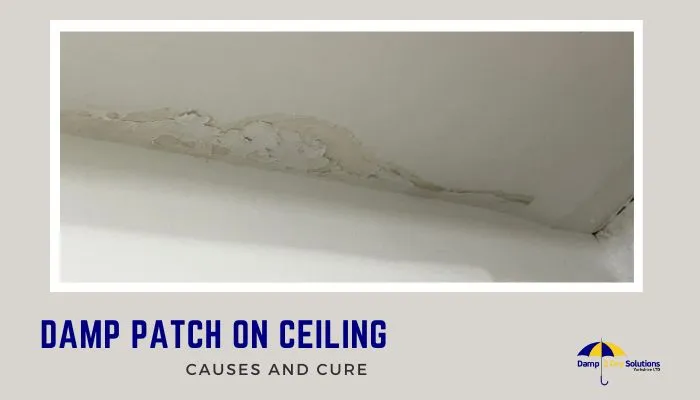
A landlord's repairing duty is statutory, it is triggered by notice, and it cannot be contracted out of. What it does not contain is a fixed number of hours. Here is what actually governs the response to a leak in a rented home.
What does section 11 actually oblige a landlord to do?
Section 11 of the Landlord and Tenant Act 1985 implies a repairing covenant into most residential tenancies granted for a term of less than seven years. It is the foundation of every argument about a leak in a rented home, and it is worth reading rather than paraphrasing.
The section obliges the lessor to keep in repair the structure and exterior of the dwelling-house, expressly including drains, gutters and external pipes; to keep in repair and proper working order the installations in the dwelling-house for the supply of water, gas and electricity and for sanitation, including basins, sinks, baths and sanitary conveniences; and to keep in repair and proper working order the installations for space heating and heating water. Section 11(3) sets the standard of repair by reference to the age, character and prospective life of the dwelling and its locality, which is why a Victorian conversion is not held to the standard of a new build.
Two boundaries are frequently misread. The obligation covers installations for the supply of water, not other fixtures, fittings and appliances for making use of that supply, which is how a tenant's own washing machine falls outside it. And it does not require the landlord to carry out works the tenant is liable for, to rebuild after fire, flood or inevitable accident, or to repair things the tenant is entitled to remove.
| Scenario | Normally responsible | Legal basis |
|---|---|---|
| Burst or leaking supply pipe within the dwelling | Landlord | LTA 1985 s.11(1)(b) |
| Leaking roof, gutter or external pipe | Landlord | LTA 1985 s.11(1)(a) |
| Failed radiator, boiler or hot water cylinder | Landlord | LTA 1985 s.11(1)(c) |
| Leak from a communal riser the landlord owns or controls | Landlord | LTA 1985 s.11(1A) |
| Tenant's own washing machine or dishwasher hose | Tenant | Outside s.11(1)(b); not an installation for supply |
| Bath or basin left overflowing | Tenant | Damage caused by the tenant |
| Damage worsened by a failure to report a known leak | Tenant, as to the worsening | Notice principle; tenant's own default |
| Damp and mould from inadequate ventilation, not disrepair | Landlord, as a fitness question | LTA 1985 ss.9A and 10 |
The obligation reaches beyond the flat itself
For leases of part of a building granted on or after 15 January 1989, section 11(1A) extends the covenant to parts of the building in which the lessor has an estate or interest, and to installations serving the dwelling that the lessor owns or controls, provided the failure affects the lessee's enjoyment of the dwelling or the common parts. In a converted house or small block, that is what brings a communal riser, a shared stack or a roof above another flat inside the landlord's duty to the tenant below.
A tenancy clause cannot override it
Landlords occasionally rely on a clause making the tenant responsible for plumbing repairs. Section 12 renders void any covenant that excludes or limits the lessor's obligations or the lessee's immunities under section 11, or penalises the tenant for relying on them, unless the county court has authorised it with the parties' consent. In an ordinary assured shorthold tenancy that authorisation does not exist, so the clause has no effect.
Why does the landlord have to be told before the duty bites?
This is the point on which the most disputes turn, and it cuts both ways. For disrepair within the demised premises, the landlord's obligation is not engaged until they have notice or knowledge of the defect. That was settled by the House of Lords in O'Brien v Robinson in 1973, which held that the duty under the statutory repairing covenant arises only once the landlord has notice, whether the defect was patent or latent. A landlord cannot be in breach over a pipe failing quietly in a ceiling void that nobody has reported.
Two qualifications keep that from being a shield. Notice need not be formal or written; knowledge from any source can suffice, and a landlord who becomes aware during an inspection has notice. And for defects in parts retained by the landlord rather than demised, such as a communal riser or a roof, the obligation is generally immediate and does not depend on the tenant reporting anything.
- For tenants: report in writing, keep a copy, and describe the symptom and the date. A text message or an email to the agent is enough and is far better than a phone call, because the date of notice is what the later argument depends on.
- For landlords and agents: log every report on receipt with a date and time, including verbal ones. A contemporaneous log is the only reliable defence against a later assertion that a problem was reported months earlier.
- For both: liability for consequential damage generally runs from notification, so the gap between the first report and the first response is where the money sits.
What does a reasonable time mean for an emergency repair?
Section 11 contains no deadline. The obligation is to repair within a reasonable time of notice, and reasonableness is judged against the severity of the problem and its consequences rather than a fixed number of days. A total loss of water supply, a live escape into a habitable room, or a leak affecting electrical installations is a different order of urgency from a dripping overflow, and the law treats it that way. There are only three sources of concrete timescale in English residential law, and section 11 is not one of them.
| Source | Timescale it sets | Who it binds |
|---|---|---|
| Landlord and Tenant Act 1985 s.11 | No fixed period; a reasonable time judged against severity | Most tenancies under seven years |
| Awaab's Law, in force 27 October 2025 | Emergency hazards investigated and made safe within 24 hours | Social housing let by registered providers |
| The tenancy agreement itself | Whatever response times it promises, if any | The parties to it |
A private landlord is not bound by the 24 hour figure, but it is now the published benchmark for an equivalent hazard in the social sector, and a court assessing reasonableness is unlikely to ignore it. Treating it as the working standard for a genuine emergency is a defensible position, and a cheaper one than arguing about it later.
What counts as an emergency in practice
The government's guidance on Awaab's Law describes an emergency hazard as one presenting an imminent and significant risk of harm that a reasonable landlord would address within 24 hours, giving examples including total loss of water supply, significant leaks, and severe damp and mould materially affecting health. That is a usable definition even outside the social sector.
- Water entering a habitable room, or running where it may reach electrical installations or a neighbouring dwelling.
- Complete loss of water, or of heating and hot water in cold weather, particularly with children or vulnerable occupiers in the household.
- A ceiling bowing, sagging or holding water, which is a safety risk before it is a repair one.
- Escaping water affecting a shared staircase, lobby or riser, which engages the freeholder too.
What does the Homes (Fitness for Human Habitation) Act 2018 add?
The 2018 Act inserted new sections into the Landlord and Tenant Act 1985 rather than creating a free-standing statute. Section 9A implies a covenant that the dwelling is fit for human habitation when the lease is granted or, if later, at the beginning of the term, and will remain fit throughout it. It carries the same exclusions as section 11 for tenant fault, rebuilding after fire or flood, and tenant-removable items, and cannot be excluded by the lease.
The significance is twofold. First, it is not limited to disrepair: a dwelling can be in repair and still unfit, which matters where the problem is a design or ventilation failure rather than a broken component. Second, section 10 sets out the matters by which fitness is determined, including freedom from damp, ventilation, water supply, and drainage and sanitary conveniences, and for dwellings in England it requires account to be taken of any prescribed hazard under the Housing Act 2004. That is what pulls the Housing Health and Safety Rating System into a contractual claim.
The Act applied to tenancies granted on or after 20 March 2019, including new periodic tenancies, and from 20 March 2020 to periodic tenancies already running, so it now covers substantially the whole private rented sector. Enforcement is by the tenant directly, through a claim for specific performance or damages, rather than through a local authority.
Where do damp and mould bring in the HHSRS?
The Housing Health and Safety Rating System was introduced by Part 1 of the Housing Act 2004 and is a risk assessment tool rather than a standard. It assesses 29 categories of hazard, of which damp and mould growth is the first, covering threats to health from house dust mites and from mould or fungal growth resulting from dampness or high humidity. Hazards scoring in the highest bands are category 1; the remainder are category 2.
The distinction has teeth. Where a local housing authority identifies a category 1 hazard it is under a duty to take enforcement action, which may be an improvement notice, a prohibition order, a hazard awareness notice or emergency remedial action. For a category 2 hazard it has a power rather than a duty. The assessment is made by the authority's environmental health team, and this route runs in parallel with a contractual claim under sections 9A and 11.
The diagnostic problem behind the legal one
This is where the legal and technical questions collide, because who is responsible depends entirely on the cause. A plumbing leak is disrepair and falls to the landlord under section 11. Condensation arising from a ventilation or heating deficiency in the building is usually a fitness question under section 9A or an HHSRS hazard. Condensation arising purely from occupier behaviour is neither, though the two are rarely cleanly separable and blaming the tenant without evidence is a weak position.
Establishing which it is requires readings rather than opinion: moisture profiling at depth as well as at the surface, temperature and relative humidity logged over time rather than spot-read, and a correlation, or its absence, between the wetting and water use. Our guide to telling damp from a leak sets out that sequence, and damp and moisture detection surveys answer the question in a form that stands up to a local authority officer.
Does Awaab's Law apply to you?
Awaab's Law came into force on 27 October 2025 and applies to social housing let by registered providers under tenancies, with limited exceptions. It does not apply to licences, to long leaseholds, or to owner-occupied homes, and at the time of writing it does not apply to the private rented sector. The Renters' Rights Act gives the government power to extend equivalent duties to private landlords, but that extension requires separate regulations which have not yet been made.
Where it does apply, phase one covers emergency hazards and damp and mould, and the timescales are specific.
| Trigger | Required action | Deadline |
|---|---|---|
| Emergency hazard, imminent and significant risk of harm | Investigate and carry out relevant safety work | As soon as reasonably practicable and within 24 hours |
| Significant damp and mould reported | Investigate | Within 10 working days of becoming aware |
| Investigation concluded | Provide a written summary of findings to the tenant | Within 3 working days |
| Investigation identifies a significant hazard | Begin relevant safety work | Within 5 working days of the investigation concluding |
| Safety work cannot be completed in time | Secure alternative accommodation at the landlord's expense | Until the work is complete |
Citizens Advice puts the effect for tenants plainly: where leak damage is an emergency hazard under Awaab's Law, a social landlord must make the home safe within 24 hours, and where that is impossible must offer somewhere else to live until the work is done.
Who pays for the leak detection survey?
Where the leak is in the structure or in an installation covered by section 11, the cost of finding it as well as fixing it falls to the landlord. A tenant is liable only for damage they caused, which includes damage made worse by not reporting a problem they knew about.
Whether the survey is worth commissioning comes down to three things. It distinguishes disrepair from condensation, which decides whether there is a repairing liability at all. It produces a dated record of what was found and when, the only durable answer to a later disrepair claim. And where the leak has damaged the dwelling, a buildings policy with a trace and access extension will often fund it, so declining forfeits cover rather than saving money. Our guide to what a leak detection survey involves sets out what the report must contain, and emergency leak detection covers a live loss.
If you are the tenant and nothing happens
There is an order to this, and skipping steps weakens the position rather than accelerating it.
- Put it in writing and keep the record. Date, symptom, room, photographs. The notice argument turns on this.
- Give access. Section 11(6) entitles the landlord to enter at reasonable times on 24 hours' written notice to inspect. Refusing undermines a disrepair claim.
- Use the complaints process. For a social landlord it is a required step before the Housing Ombudsman will look at a complaint; a letting agent in a redress scheme has its own.
- Contact the local authority. Environmental health can inspect under the HHSRS and must act on a category 1 hazard. The route is free and needs no cooperation from the landlord.
- Take advice before litigating. A claim under section 11 or section 9A is a court claim, and Citizens Advice and Shelter both give free initial guidance on whether one is worth bringing.
Do not withhold rent. It is the most commonly suggested remedy and the most damaging, because arrears create a ground for possession regardless of the merits of the disrepair. Where money is being spent on repairs the landlord should have carried out, the mechanism for recovering it is set off, and that needs advice before it is attempted.
This article explains how the statutes work; it is not legal advice, and the outcome in any case turns on the tenancy, the facts and the evidence. Where the dispute is between leaseholders in a block, the lease rather than the statute governs it, and that is covered in our guide for leaseholders and freeholders whose leak has damaged a neighbouring flat.
How we help with this
If the article describes a problem you actually have, these are the visits that deal with it.
- burst pipe repair
A split or burst pipe isolated and repaired, day or night.
- damp and moisture surveys
Moisture mapping that separates a leak from condensation or damp.
- an emergency plumber in London
Attendance when water is running and damage is still spreading.
Frequently asked questions
How quickly does a landlord legally have to fix a leak?
Section 11 of the Landlord and Tenant Act 1985 sets no fixed period. The obligation is to repair within a reasonable time of notice, judged against the severity of the problem rather than a number of days. The only concrete statutory timescale in English residential law is Awaab's Law, which from 27 October 2025 requires social landlords to investigate and make safe an emergency hazard within 24 hours. Private landlords are not bound by that figure, but it is now the published benchmark against which reasonableness will be assessed.
Does the landlord have to be told before they are in breach?
For disrepair inside the demised premises, yes. The House of Lords held in O'Brien v Robinson in 1973 that the statutory repairing obligation arises only once the landlord has notice or knowledge of the defect, whether patent or latent. Notice does not have to be formal, and knowledge from any source can suffice. For defects in parts retained by the landlord, such as a communal riser or roof, the obligation is generally immediate and does not depend on the tenant reporting it.
Can a tenancy agreement make the tenant responsible for plumbing repairs?
Not in a way that reduces the landlord's section 11 duties. Section 12 of the Landlord and Tenant Act 1985 makes void any covenant or agreement that excludes or limits the lessor's obligations or the lessee's immunities under section 11, or that penalises the tenant for relying on them, unless the county court has authorised it with the consent of the parties. In an ordinary assured shorthold tenancy that authorisation does not exist, so such a clause has no effect.
Is damp and mould the landlord's responsibility if there is no leak?
It can be. Section 9A of the Landlord and Tenant Act 1985, inserted by the Homes (Fitness for Human Habitation) Act 2018, implies a covenant that the dwelling will remain fit for human habitation, and section 10 lists freedom from damp and ventilation among the matters determining fitness. Damp and mould growth is also hazard one under the Housing Health and Safety Rating System, and a local authority must take enforcement action where it assesses a category 1 hazard. Which applies depends on the cause, which has to be established by measurement.
Who pays for leak detection in a rented property?
The landlord, where the leak is in the structure or in an installation covered by section 11, and that includes the cost of locating it rather than just repairing it. A tenant is liable only for damage they caused, which includes damage made worse by failing to report a problem they knew about. Where the leak has damaged the dwelling, a buildings policy with a trace and access extension will frequently fund the survey, so declining to commission one often forfeits cover rather than saving money.
Does Awaab's Law apply to private landlords?
Not at present. Awaab's Law came into force on 27 October 2025 and applies to social housing let by registered providers under tenancies, with limited exceptions. It does not cover licences, long leaseholds or owner-occupied homes, and it does not currently extend to the private rented sector. The Renters' Rights Act gives the government power to apply equivalent duties to private landlords, but that requires separate regulations which have not yet been made.