Damp or Leak? The Readings That Tell Them Apart, and the Ones That Do Not
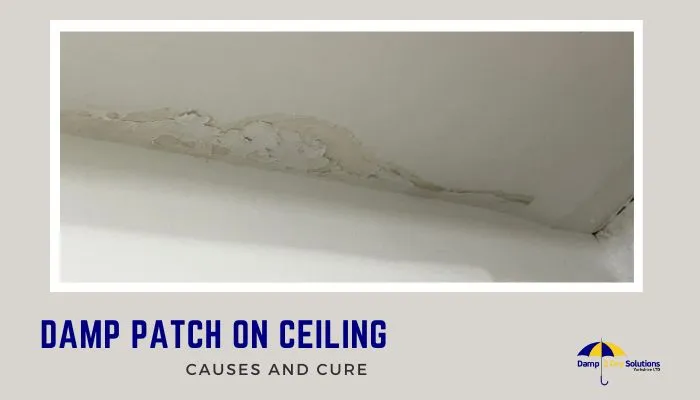
A wet wall has four plausible causes and only one of them is a leak. Getting the answer wrong costs either an unnecessary excavation or a replumbed bathroom that solves nothing. Here is how the four are separated by measurement.
The four things it could be
A damp patch is a symptom, not a diagnosis. In a London property there are four realistic explanations, and they demand entirely different remedies. Confusing them is expensive in both directions: opening a floor to chase a leak that is actually condensation, or improving ventilation in a flat where a heating pipe has been weeping into a screed for two years.
The four are condensation, penetrating damp, rising damp and a plumbing or drainage leak. They can coexist, and in older converted stock they often do, which is why the diagnostic question is rarely which one is it and more usually which ones are contributing and in what proportion.
| Cause | Typical pattern | What it correlates with | What normally confirms it |
|---|---|---|---|
| Condensation | Diffuse, on cold surfaces, corners, reveals, behind furniture, often with surface mould | Cold weather, occupancy, poor ventilation, time of day | Logged temperature and humidity showing surface temperature at or below dew point |
| Penetrating damp | Localised, usually on an external wall, often at a defect | Rainfall, and wind direction in driven rain | External fabric inspection plus wetting that follows rain events |
| Rising damp | A band at low level, commonly with a salt tide mark at the upper limit | Nothing external; persistent and seasonally stable | Moisture profile by height, plus hygroscopic salt analysis |
| Plumbing or drainage leak | Localised, often with a defined wet edge that expands | Water use: flushes, showers, heating cycles, appliance runs | Meter or pressure test showing loss, then located by survey |
That final column is the whole discipline. Each cause has a confirming measurement, and none of them is a moisture meter reading taken on a plaster surface.
Why a surface moisture reading proves almost nothing
The instrument most associated with damp investigation is the one most often misused. It is worth being precise about what each type measures, because the limitations are not incidental.
| Instrument | What it measures | Depth it reads to | What it cannot tell you |
|---|---|---|---|
| Resistance meter, two pins | Electrical conductance between the pins | The depth the pins reach, typically a few millimetres | Whether the conductance is water or salts; the source of the water |
| Capacitance meter, non-invasive | Dielectric response of the material below the pad | Commonly around 10 to 20mm, depending on the instrument | Whether a reading comes from moisture, density change, foil backing or metal |
| Deep wall probes | Conditions in a drilled hole at a chosen depth | Whatever depth is drilled | Nothing about the surface layer unless read separately |
| Carbide or gravimetric test on a drilled sample | Actual moisture content of the sample by mass | The sample location | Anything outside the point sampled |
The calibration problem
Resistance meters are calibrated for timber. On plaster, masonry or screed the number they display is not a moisture content but a relative value, often expressed as wood moisture equivalent, and it is affected by anything conductive in the material. Hygroscopic salts left behind by long-term evaporation will read high on a wall that is, in terms of free water, almost dry. This is the mechanism behind a large proportion of rising damp misdiagnoses.
Surface versus depth is the question that matters
The single most informative thing a moisture survey can do is read the same location at the surface and at depth. Condensation wets from the surface inwards, so surface readings exceed depth readings. A leak wets from behind or below, so depth readings exceed surface readings. That comparison, recorded properly, does more diagnostic work than any number of surface readings across a wall, and it is the reason a report should state whether each reading is a surface or a depth measurement. A report that does not say is not reporting a finding.
What temperature and humidity readings are actually for
Condensation is not a plumbing phenomenon, it is an air phenomenon, and it cannot be diagnosed or excluded without measuring the air. Water vapour condenses on a surface when that surface falls to or below the dew point of the air in contact with it. Dew point is a function of air temperature and relative humidity, so establishing whether condensation is occurring requires three quantities: air temperature, relative humidity, and surface temperature at the affected location.
BS 5250:2021, Management of moisture in buildings, is the code of practice governing this in the UK; it replaced the earlier BS 5250 code of practice for the control of condensation in buildings and takes a broader view of moisture risk in the fabric as a whole. The practical implication for a survey is that a spot reading of humidity on the day of the visit is close to useless. Internal humidity in an occupied flat swings enormously with cooking, bathing, drying laundry and occupancy, and a single reading catches an arbitrary point on that curve.
- Log rather than spot-read. A data logger recording temperature and relative humidity at intervals over several days captures the pattern: whether humidity spikes with occupancy, whether it recovers overnight, and whether ventilation is clearing it.
- Measure the surface, not just the air. An infrared surface thermometer or a thermal camera gives the surface temperature that has to be compared against the calculated dew point.
- Record the external conditions too. Penetrating damp is confirmed by correlation with rainfall, which means the rain has to be recorded alongside the readings.
- Note occupancy. A flat that was empty during the logging period tells you about the fabric; one that was heavily occupied tells you about the interaction between fabric and use. Both are useful, but only if which one you have is written down.
Sustained high humidity at a cold surface is what supports mould germination, and the relevant figure is the humidity at the surface rather than in the middle of the room. A room averaging around 70 per cent relative humidity will have considerably higher humidity at a cold external wall, which is why mould appears in corners and behind furniture while the room itself feels merely stuffy. The government's guidance on the health risks of damp and mould in the home is explicit that landlords should not assume damp and mould is caused by occupier lifestyle, and that the cause has to be identified.
Condensation: the most commonly misdiagnosed of the four
Condensation is the default explanation offered by landlords and the default explanation rejected by tenants, and both positions are usually asserted rather than evidenced. The distinguishing features are consistent.
It appears on the coldest surfaces first: external wall corners, window reveals, lintels, the wall behind a wardrobe on an external wall, and areas of poor insulation or thermal bridging. It is diffuse rather than defined. It correlates with the heating season and with the hours the property is occupied. Surface moisture readings exceed depth readings. Mould growth is usually superficial, and is often the first thing noticed.
What condensation does not look like
Condensation does not produce a wet patch with a sharply defined expanding edge. It does not produce a reading that is higher at 30mm depth than at the surface. It does not track along a single line across a ceiling. And it does not appear in the middle of a well-insulated internal wall with dry surroundings. Where any of those features is present, the condensation diagnosis is incomplete at best, and a damp and moisture detection survey should establish what else is going on before remediation is specified.
Penetrating damp and its relationship to rain
Penetrating damp is water entering through the external fabric: a failed pointing joint, a cracked render, a blocked or leaking gutter, a defective flashing, a slipped tile, a failed window seal, or a saturated solid wall in driven rain. It is often the easiest of the four to confirm, because it has an external cause that can be inspected and a timing signature that can be observed.
The confirming test is correlation with weather. Internal wetting that worsens during and after rainfall, and improves in a dry spell, is penetrating damp until shown otherwise. Wetting that is indifferent to the weather but tracks water use is a leak. Wetting that is indifferent to both, and follows the heating season instead, is condensation.
- Inspect the external face at the height and position corresponding to the internal patch, allowing for the fact that water tracks downwards and sideways inside a wall.
- Check rainwater goods under load rather than in dry weather. A gutter joint that is sound when empty can discharge heavily when the gutter is running full.
- Look above the patch, not only behind it. Flashings, copings, parapets and balcony thresholds are common sources for damp that manifests a storey lower.
- Where a flat roof or balcony is suspected, remember that the point of entry is frequently well away from the point of appearance.
Rising damp, and why it is diagnosed more often than it occurs
True rising damp is groundwater drawn up through porous masonry by capillary action. It is real, and it does occur, particularly where a damp proof course has been bridged by a raised external ground level, a solid floor, an added render coat or a flower bed. It is also, by a wide margin, the most over-diagnosed condition in British housing, because the instrument commonly used to identify it responds to salts as well as to water.
The genuine article has a characteristic profile. Moisture content is highest at the base of the wall and decreases with height, usually reaching background within about a metre. At the upper limit of evaporation there is frequently a band of hygroscopic salts, chlorides and nitrates carried up from the ground, which appears as a tide mark and which will itself read high on a resistance meter long after the wall has dried.
The test that actually distinguishes it
Distinguishing rising damp from a low-level leak or from a bridged damp proof course requires a moisture profile by height, taken at depth rather than at the surface, and where the diagnosis matters, analysis of the salts present. Groundwater salts are chemically distinguishable from the plain water of a plumbing leak, which deposits no such band. A low-level wet patch with no salt band, that correlates with water use and reads higher at depth on one side of a wall than the other, is a leak in a buried pipe and not rising damp, and treating it with a chemical damp proof course will not improve it.
The diagnostic sequence, in order
Order matters because each stage constrains the next, and because the cheap eliminations come first.
| Stage | What is done | What it settles |
|---|---|---|
| 1. History | When it appeared, whether it changes with weather, heating or a particular fixture, and what has been done already | Which correlations are worth testing; previous remedial work often explains an odd pattern |
| 2. Is there a plumbing loss at all | Timed meter test with every outlet closed; heating circuit isolated and its pressure watched separately | Eliminates or confirms the most expensive of the four causes, usually within two hours |
| 3. Environmental logging | Temperature and relative humidity over several days, plus surface temperatures at the affected locations | Whether condensation is occurring, and whether it is sufficient to explain what is visible |
| 4. Moisture mapping | Readings across and beyond the affected area, at surface and at depth, recorded as such | The extent, and the gradient that indicates which direction the water comes from |
| 5. External inspection | Fabric above and around the internal patch; rainwater goods observed under load | Whether a defect in the envelope can account for the pattern |
| 6. Location | Thermal imaging, acoustic listening, correlation or tracer gas, chosen to suit the system and construction | The position of the defect, once a leak has actually been established |
A falling boiler pressure gauge at stage two is as often a failed expansion vessel or a discharging pressure relief valve as it is a leak, which is why the heating circuit is watched separately rather than assumed. Five of the six stages are non-destructive and inexpensive, and together they usually settle the question. Our comparison of acoustic, thermal and tracer gas methods covers which applies where at stage six. Opening up is the last step, not the first.
Where the diagnosis goes wrong
Most misdiagnoses in this field come from a small number of recurring errors, and all of them are avoidable by recording more and concluding later.
- Surface readings treated as moisture content. On masonry and plaster a resistance meter gives a relative indication, not a percentage, and salts read as water.
- A single humidity reading standing in for a pattern. Internal humidity swings hourly. One reading proves nothing about the condensation risk over a week.
- A thermal anomaly reported as a leak. A cold patch on a thermogram can be a thermal bridge, a missing section of insulation, an emissivity difference or a reflection. Without a corroborating moisture reading it is an observation, not a finding. Our page on thermal imaging surveys sets out how those are excluded.
- Assuming one cause. A flat with a slow heating leak and inadequate extract ventilation has two problems, and fixing either alone leaves a visibly damp property and an unhappy occupier.
- Attributing it to lifestyle without measuring. This is both poor practice and, in a tenanted property, a weak legal position; the causes of damp and mould have to be identified rather than assumed.
Where the outcome will be argued about, with an insurer, a leaseholder, a tenant or a local authority, the readings and their timings are the entire value of the exercise. A survey that records the eliminations, states whether each moisture reading was taken at the surface or at depth, and logs the ambient conditions alongside is a document that settles the question. One that reports a conclusion without them invites the argument it was commissioned to end. Related reading: what a brown stain on a ceiling indicates, whether a wall stain is a leak or damp, and how a leak produces mould.
How we help with this
If the article describes a problem you actually have, these are the visits that deal with it.
- our full guide to leak detection
How each method works and when it is the wrong tool for the job.
- damp and moisture surveys
Moisture mapping that separates a leak from condensation or damp.
Frequently asked questions
How do I tell whether a damp patch is condensation or a leak?
By the direction of wetting and by what it correlates with. Condensation wets from the surface inwards, so a surface moisture reading exceeds a reading taken at depth in the same place, and it tracks cold weather and occupancy. A leak wets from behind or below, so depth readings exceed surface readings, and the wetting tracks water use such as showers, flushes or heating cycles. A timed meter test with all outlets closed will confirm or eliminate a supply loss in under two hours.
Why is a moisture meter reading not enough on its own?
Resistance meters are calibrated for timber. On plaster, masonry or screed the number displayed is a relative indication rather than a moisture content, and anything conductive in the material raises it. Hygroscopic salts left by long-term evaporation will read high on a wall that holds very little free water, which is the mechanism behind a large share of rising damp misdiagnoses. A meaningful reading is one taken at both surface and depth, recorded as such, and cross-checked against a second instrument type.
Why does a survey need to record temperature and humidity?
Because condensation is an air phenomenon and cannot be diagnosed or excluded without measuring air. Vapour condenses when a surface falls to or below the dew point of the air touching it, and dew point is a function of air temperature and relative humidity. A single spot reading catches an arbitrary point on a curve that swings with cooking, bathing, laundry and occupancy, so the readings have to be logged over several days and compared against surface temperatures at the affected locations.
Is rising damp a real thing?
Yes, but it is diagnosed far more often than it occurs. Genuine rising damp shows moisture highest at the base of the wall, decreasing with height and usually reaching background within about a metre, with a band of hygroscopic salts at the upper limit of evaporation. Those salts read high on a resistance meter long after the wall has dried, which is why the instrument alone cannot confirm it. A moisture profile by height taken at depth, with salt analysis where the diagnosis matters, is what distinguishes it from a low-level leak.
Can thermal imaging tell damp from a leak by itself?
No. A thermal camera measures apparent surface temperature, and a cool patch can be a thermal bridge, a gap in insulation, a difference in material emissivity or a reflection from a shiny surface. It is an excellent tool for narrowing a large area quickly and for showing the extent and shape of a wetted zone, but a thermal anomaly without a corroborating moisture reading is an observation rather than a finding. It also needs a temperature differential, so a leak that has dried may be invisible.
What should a damp and leak survey report contain?
The eliminations as well as the conclusion. That means the timed meter test result with the interval stated, the heating system pressure before and after isolation, moisture readings identified individually as surface or depth measurements with their locations, ambient temperature and relative humidity logged over a period rather than spot-read, external conditions during that period, and dated photographs cross-referenced to a plan. A report that states a conclusion without those readings cannot be tested, which means it cannot settle a dispute.