How to Drain Down a Central Heating System, and When Not To
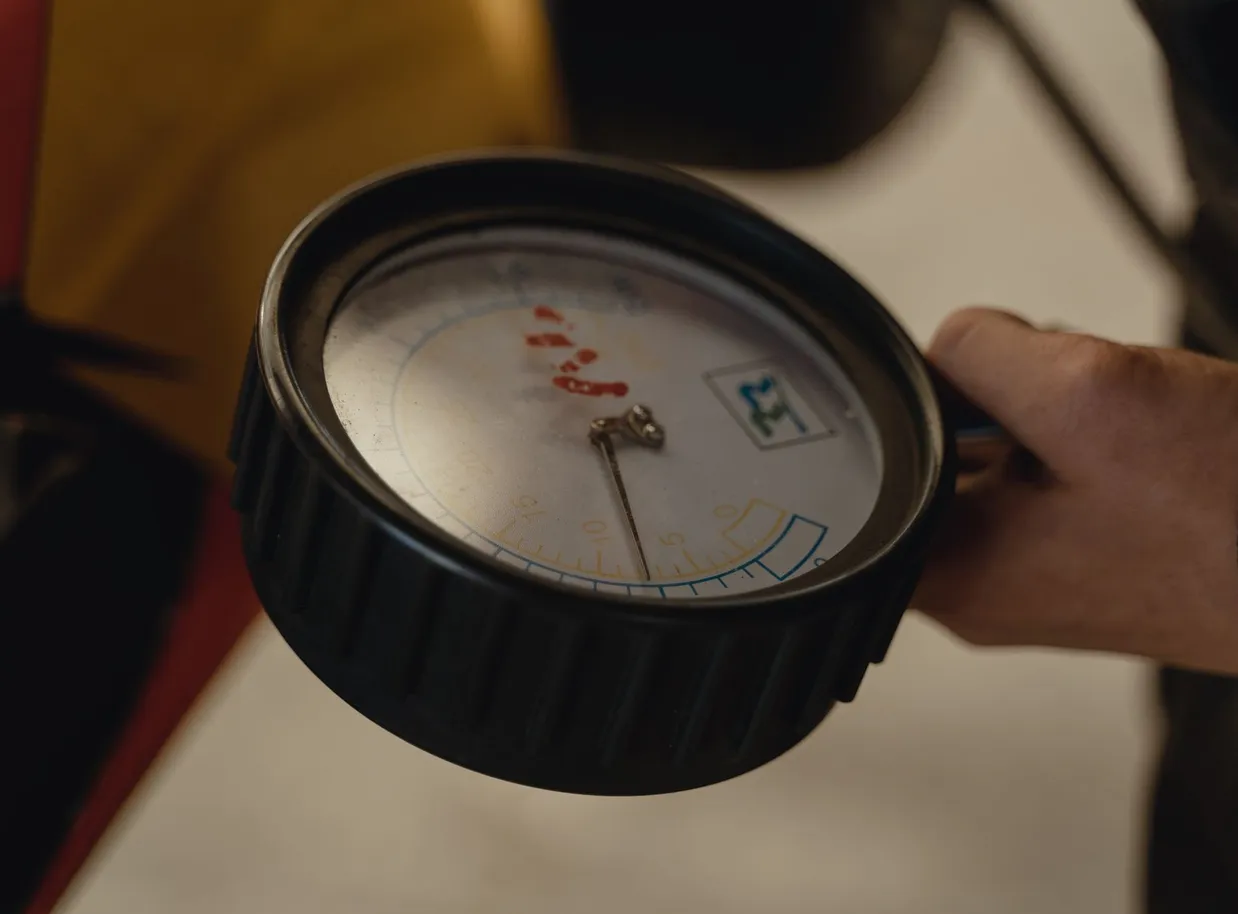
Draining a heating system removes the inhibited water it has been protected by and works every joint through a full thermal cycle. Half the skill is knowing when not to do it.
When a drain down is necessary, and when it is not
Draining a heating system is a bigger intervention than it looks. It removes the inhibited water the system has been protected by, it introduces oxygen, and it disturbs joints that have been undisturbed for years. Sometimes it is unavoidable. Often it is not, and a partial isolation does the job with a fraction of the consequences.
The question to ask before starting is narrow: does the work require the whole circuit to be empty, or only one part of it? Most radiator work, most valve work and a good deal of pipe work can be done with the rest of the system still full.
| Job | Full drain down | Better alternative |
|---|---|---|
| Removing one radiator to decorate | Not needed | Close both valves, drain the radiator only |
| Replacing a radiator valve | Usually not | Freeze the pipe or isolate the branch, then drain locally |
| Replacing a boiler | Yes | Combine with a chemical clean and fresh water flush |
| Chemical clean or power flush | Yes, as part of the process | None, the water has to be changed |
| Tracer gas leak detection on the circuit | Yes | None, the pipe has to be empty to take gas |
| Work on buried pipework in a screed | Usually | Isolate the affected zone at a manifold where one exists |
| Adding a magnetic filter | Partial | Drain to below the fitting position only |
There is a cost to the unnecessary drain down that is easy to overlook. Fresh mains water is oxygenated, and oxygen is what drives the corrosion that produces magnetite sludge in a steel radiator system. Every refill is a fresh dose. Our article on central heating sludge and corrosion covers how that damage accumulates and why a system drained repeatedly ages faster than one left alone.
Sealed and open vented systems drain differently
Before touching anything, establish which type of system you have, because the isolation step is completely different and getting it wrong means refilling a system that is still being fed.
Identifying which you have
A sealed system has a pressure gauge on or near the boiler, a filling loop, and no water tanks in the loft beyond a domestic cold water cistern if one exists at all. A combination boiler is always on a sealed system. An open vented system has a small feed and expansion cistern in the loft, separate from any larger cold water storage tank, with an open vent pipe curling over it and a ball valve to top it up. That cistern is the reason the isolation step differs: leave it live and it will simply refill the system as fast as you drain it.
On a sealed system you isolate by closing the filling loop valves and disconnecting the loop. On an open vented system you tie up the ball valve in the feed and expansion cistern, or close the valve on its supply, so nothing replaces what you take out.
The drain down sequence
Preparation, before a single valve is turned
Let the system go cold. Heating water at operating temperature will scald, and a drain cock opened on a hot system is a genuine injury risk rather than a theoretical one. Switch the heating off and leave it for at least a couple of hours, longer on a system with a large cylinder and a lot of pipework.
- Turn off the boiler and, on an open vented system, the immersion heater if one is fitted
- Isolate the water feed: close and disconnect the filling loop, or tie up the ball valve in the feed and expansion cistern
- Locate the drain cocks, usually at the lowest points of the system and often on the downstairs radiators or at the bottom of a pipe drop
- Open every thermostatic and lockshield radiator valve fully, so nothing traps water above a closed valve
- Have a hose long enough to reach a drain or gully, a jubilee clip to secure it, towels, and a container for the first dirty flush
- Photograph the lockshield valve positions, and count the turns as you open them, so the balance can be restored
That last point is the one most often skipped and the one most often regretted. Lockshield valves are set to balance flow across the system, and reopening them all without recording where they were means rebalancing every radiator afterwards.
Draining the system
Attach the hose to the lowest drain cock, secure it with the clip, and run it to a gully or drain outside. Heating water is black, it stains, and it carries inhibitor and corrosion products, so it does not belong on a lawn, in a flower bed or down a soakaway.
Open the drain cock and let it run. The flow will slow as the system empties down to the level of the vents, and at that point air has to be admitted for the rest to come out. On an open vented system this happens naturally through the vent pipe. On a sealed system, open the bleed screws on the upstairs radiators first, then work down, which lets air in behind the water and allows the lower parts of the system to empty. Opening downstairs bleed screws early achieves nothing except a wet floor.
Where there is more than one drain cock, use the others in turn to clear sections the first one cannot reach, and expect residual water in horizontal runs that have no fall to a drain point. A system is never completely empty; it is empty enough to work on.
Refilling, venting and recommissioning
Refilling is where most of the avoidable problems are created, almost always by doing it too quickly. Water entering fast pushes air into pockets rather than ahead of itself, and the airlocks that result can take longer to clear than the whole drain down took.
Close every drain cock and every bleed screw first. On a sealed system, reconnect the filling loop and open it slowly, watching the gauge, until the cold fill pressure specified by the boiler manufacturer is reached. On an open vented system, release the ball valve and let the feed and expansion cistern fill the system by gravity. In both cases, work round the radiators from the lowest to the highest, bleeding each one until water appears, then move on. The correct technique for that, including why a radiator that is cold at the top is not always full of air, is covered in our guide to bleeding a radiator properly.
Once the system is full and vented, three things remain. Re-dose the inhibitor. Reset the lockshield valves to the positions you recorded. And bring the pressure back to the manufacturer's figure once the air has finished coming out, which usually means a second top-up after the first heating cycle; our guide to repressurising a boiler covers that step and the mistakes around it.
The inhibitor requirement is not optional
BS 7593:2019, the code of practice for the preparation, commissioning and maintenance of domestic central heating and cooling water systems, sets the expectation clearly: the system is chemically cleaned and flushed with fresh water before inhibitor is added, inhibitor is topped up after any work that drains the system, its level is checked annually, and the water is re-dosed or fully tested every five years. The same standard expects a permanent in-line filter capable of capturing magnetic and non-magnetic debris on new and replacement boiler installations, and the energy efficiency guidance in Approved Document L points at BS 7593 for water treatment when a system is installed or a boiler replaced.
The practical reading of that is simple. A system refilled with plain mains water and left is unprotected, and the corrosion clock starts again from the moment the last drain cock closes.
What a drain down cannot do
A drain down empties a system. It does not clean one, and the difference matters because the two are routinely confused.
Sludge is heavy and settles. Magnetite lies in the bottom of radiator panels, in horizontal pipe runs and in the low points of the circuit, and draining by gravity carries away the water above it while leaving a good deal of the deposit exactly where it was. Removing that requires a chemical clean with a circulating cleanser, or a power flush that moves water at velocity through each emitter in turn, or in bad cases the removal and hosing out of individual radiators. A drain and refill that is described as a clean is neither.
Nor does a drain down fix a leak, and it can reveal several. The cycle of emptying, cooling, refilling and reheating works every joint in the system through a full range of thermal movement, and compression fittings that had been holding at the edge of their tolerance for years frequently choose that moment to weep. Old radiator valve glands are the classic case: a gland that has been static for a decade will often pass once the spindle is turned. This is not damage caused by carelessness; it is a system revealing its condition. But it does mean a drain down should be scheduled with time in hand rather than at four on a Friday afternoon. Where a leak is the reason for the drain down in the first place, our guide to finding a central heating leak covers the tests that should come before it.
| Problem | Why it happens | Prepare by |
|---|---|---|
| Drain cock will not open, or will not close again | Corroded or scaled after years unused | Having a replacement drain cock on hand before starting |
| Radiator valve gland weeps after being turned | Packing hardened around a static spindle | Carrying gland packing or replacement valves |
| System will not vent, radiators stay cold at the top | Refilled too fast, air trapped in pockets | Filling slowly and bleeding from the bottom upward |
| Pressure drops after the first heating cycle | Dissolved air coming out of solution, not a leak | Expecting a second top-up and re-bleed |
| Radiators unbalanced, some hot and some cool | Lockshield settings lost when valves were opened | Recording turns or photographing positions first |
| Joint weeps on refill | Thermal movement through the cycle | Allowing time in the schedule for remedial work |
Checks once the system is back in service
The job is not finished when the radiators get hot. A refilled system is still shedding dissolved air, its joints have just been through a full thermal cycle, and its protection has been replaced rather than proven. The following week is when problems declare themselves, and a short round of checks catches nearly all of them while they are still small.
- Read the pressure gauge cold on the first, third and seventh days and write the numbers down; a drop after the first cycle is usually air coming out of solution, a drop that continues is not
- Re-bleed the radiators once after the first full heating cycle, then again a few days later if any are cold at the top
- Run a dry tissue round the underside of every radiator valve union and gland nut, because a weep shows there before it shows on the floor
- Check the floor beneath any joint that was disturbed, and under the boiler, at the end of the first day
- Confirm every drain cock is closed and dry, including the ones you did not use
- Check the external pressure relief discharge pipe after the first few cycles, since an overfilled system will lift the valve
- Feel each radiator across its full face and reset any lockshield that is now out of balance
The weep at a radiator union is the most common find, and it is usually a fitting that needs cleaning and remaking rather than a component that has failed. Our guide to radiator leaks and their causes covers which of these are tightenable, which need new packing, and which mean the valve or the panel has reached the end of its life.
One thing worth resisting: the urge to raise the cold pressure above the manufacturer's figure so that it does not have to be topped up again. An overfilled sealed system has less room for expansion, reaches the relief valve setting sooner, and dumps water outside, which produces exactly the recurring loss the higher fill was meant to avoid.
Where the competence line sits
The wet side of a heating system, meaning the radiators, valves, pipework and drain cocks, is plumbing. The appliance is not. Under the Gas Safety (Installation and Use) Regulations 1998, work on a gas appliance must be carried out by a person who is competent and registered with the Gas Safe Register, and that boundary does not move because the task sounds like plumbing.
| Task | Who |
|---|---|
| Draining and refilling the wet circuit | Competent plumber, or a capable householder on a straightforward system |
| Removing and refitting a radiator | Plumber or capable householder |
| Dosing inhibitor and fitting an in-line filter on pipework | Plumber |
| Anything behind the boiler casing | Gas Safe registered engineer only |
| Expansion vessel or pressure relief valve inside the appliance | Gas Safe registered engineer only |
| Recommissioning the boiler after a system refill | Gas Safe registered engineer |
Two further cautions. On an unvented hot water system, the stored cylinder is a separate installation with its own safety devices and its own competence requirements, and it is not part of the heating drain down. And in a flat or a block served by communal heating or a heat interface unit, the circuit may not be yours to drain at all; the managing agent decides, and draining a shared riser without permission is a conversation nobody wants to have afterwards.
How we help with this
If the article describes a problem you actually have, these are the visits that deal with it.
- central heating leak detection
For a boiler losing pressure or a circuit that will not hold.
- our full guide to leak detection
How each method works and when it is the wrong tool for the job.
Frequently asked questions
How long does it take to drain down a central heating system?
The draining itself is usually under an hour on a domestic system once the water is cold, but the job around it is longer. The system has to cool first, which takes a couple of hours and more where there is a cylinder and a lot of pipework. Refilling has to be done slowly to avoid trapping air, then every radiator is bled from the lowest upward, the inhibitor is re-dosed and the lockshield valves reset. Allow most of a day rather than an hour.
Do I have to drain the whole system to take a radiator off?
No, and you should not. Close the thermostatic valve and the lockshield at either end of that radiator, counting the turns on the lockshield so the balance can be restored, then drain the radiator alone into a container through its bleed screw and valve union. The rest of the circuit stays full and inhibited. A full drain down for a single radiator removes the protection from the whole system and introduces a fresh dose of oxygen for no reason.
Does draining the system clean out the sludge?
No, and the two are routinely confused. Magnetite sludge is heavy and settles in the bottom of radiator panels, in horizontal pipe runs and at the low points of the circuit. Gravity draining carries away the water above the deposit and leaves much of the deposit behind. Removing it needs a chemical clean with a circulating cleanser, a power flush that moves water at velocity through each emitter, or in bad cases removing radiators and hosing them out.
What do I add to the system after refilling it?
Corrosion inhibitor, at the dose the product specifies for the system volume. BS 7593:2019, the code of practice for the preparation, commissioning and maintenance of domestic central heating and cooling water systems, expects inhibitor to be topped up after any work that drains the system, checked annually, and re-dosed or the water fully tested every five years. It also expects a permanent in-line filter on new and replacement boiler installations. A system refilled with plain mains water is unprotected from the moment the drain cock closes.
Why did a radiator valve start leaking after the drain down?
Because the gland packing had hardened around a spindle that had not moved for years, and turning it broke the seal that hardened packing was providing. The same applies to compression joints that had been holding at the edge of their tolerance: emptying, cooling, refilling and reheating works every joint through a full range of thermal movement. It is the system revealing its condition rather than damage caused by carelessness, which is why a drain down should be scheduled with time in hand.
Can I drain down my own heating system?
The wet side, meaning radiators, valves, pipework and drain cocks, is plumbing and a capable householder can do it on a straightforward system. The appliance is different. Under the Gas Safety (Installation and Use) Regulations 1998, work on a gas appliance must be carried out by someone competent and registered with the Gas Safe Register, so anything behind the boiler casing, including the expansion vessel and pressure relief valve, and recommissioning the boiler afterwards, is not a householder task.