Are Smart Water Leak Detectors Worth It for a Landlord? Sensors, Shut Off Valves and False Positives
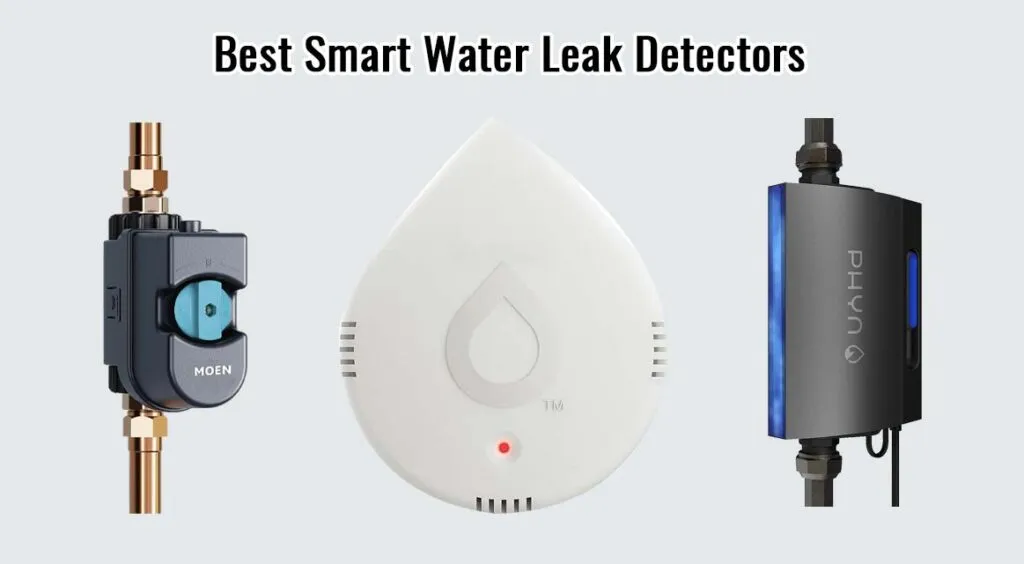
For a landlord or managing agent the question is not whether these devices work. It is which failure modes they catch, which they are blind to, and whether the insurer gives you anything for having them.
What the different sensor types actually detect
Smart leak detection is not one technology. It is four, they detect different things, and a system built from the wrong one for the building will report nothing while the property floods. For a portfolio owner that distinction matters more than the brand.
| Sensor type | What it detects | What it is blind to | Where it belongs |
|---|---|---|---|
| Spot sensor, conductive probes | Standing water bridging two contacts at that exact point | Anything that does not reach the sensor, including water running under a floor or into a void | Under sinks, behind washing machines and dishwashers, in boiler cupboards, at cylinder trays |
| Rope or cable sensor | Water contacting any point along a linear run | The same blind spot, extended along a line rather than a point | Basement and tank room perimeters, plant rooms, under a run of appliances |
| Flow and pressure monitor on the incoming supply | Abnormal flow patterns: continuous low flow, unusually long draw, flow when the property should be empty | Anything not drawing from the monitored supply, including waste, drainage and rainwater | At or just after the internal stop tap |
| Thermal or temperature and humidity sensor | Conditions associated with condensation risk, and freezing risk in an unheated void | Liquid water itself; it infers conditions rather than detecting escape | Cold voids, loft tanks, unheated risers, flats with a damp history |
Two structural facts follow. First, spot and rope sensors detect a consequence at a location you chose in advance, which means they only ever protect places you predicted. Second, flow monitoring detects a behaviour of the whole supply, which means it protects everything downstream of it, including pipework you cannot see. For a landlord who cannot inspect between tenancies as often as they would like, that difference is the whole argument.
Flow monitoring versus spot sensors: which failures does each catch?
The useful way to compare these devices is against the failure modes that actually generate claims, rather than against each other's feature lists.
| Failure mode | Spot or rope sensor | Flow or pressure monitor | Temperature and humidity sensor |
|---|---|---|---|
| Burst pipe, high flow | Only if water reaches the sensor | Detects quickly | No |
| Failed washing machine or dishwasher hose | Detects, if placed there | Detects, if flow is abnormal for the time of day | No |
| Pinhole in a concealed supply pipe | Usually no; water tracks into the structure | Detects as persistent low flow, given enough sensitivity and time | No |
| Weeping joint on a heating circuit | Rarely | No, unless the system tops itself up from the mains | No |
| Leaking waste trap or shower tray seal | Sometimes, if it surfaces at the sensor | No; not on the monitored supply | No |
| Overflowing bath or basin | Detects, if placed on that floor | Detects as an abnormally long draw | No |
| Frozen pipe before it bursts | No | No | Detects the conditions |
| External supply pipe leak before the stop tap | No | No, if the monitor sits downstream | No |
Read down the flow monitor column and the honest conclusion is that a single device on the incoming supply covers the largest share of escape of water losses, but it has two hard blind spots: anything on the heating circuit that is not drawing mains water, and anything on the waste and drainage side. Those are not marginal categories. A failed shower tray seal or a leaking waste branch is a common and expensive loss in a block, and no supply-side monitor will ever see it. Our page on leak prevention covers the inspection routine that fills those gaps.
Does a shut-off valve change the economics?
Detection tells someone there is a problem. An automatic shut-off valve acts on it. The difference between the two is the difference between a phone alert at 3am in a property you do not live in and a supply that has already closed itself.
For a tenanted or vacant property under portfolio management, automatic shut-off is the feature that converts a monitoring device into a loss-limitation device, because the response time stops depending on a human being reading a notification. The trade-off is that a valve which closes when it should not is a service failure with real consequences: a tenant without water, an out-of-hours call-out, and in a commercial building potentially a loss of sprinkler or process supply.
What the water regulations require of a device on the supply
Anything fitted to a water supply in England and Wales falls within the Water Supply (Water Fittings) Regulations 1999. Regulation 3 prohibits installing, connecting, arranging or using a fitting in a manner that causes or is likely to cause waste, misuse, undue consumption or contamination, or the erroneous measurement of water. Regulation 4 requires every water fitting to be of an appropriate quality and standard and suitable for the circumstances in which it is used.
WRAS approval is not itself a legal requirement, but it is the ordinary way of demonstrating that a fitting meets the regulation 4 standard, and water companies, building control and insurance surveyors routinely ask for it. Two practical points follow for anyone specifying a shut-off system. Confirm that the complete valve assembly holds current approval and not just the valve body, because an approved body with unapproved seals or an unapproved actuator does not satisfy the requirement. And check with the water undertaker whether the particular installation is notifiable under regulation 5, since that depends on the work involved rather than on the device category.
What do insurers actually recognise?
This is where most marketing material for these devices overstates the position, so it is worth separating what is demonstrably true from what is implied.
What is true is that at least one UK insurer has built a device into its proposition. Hiscox partnered with LeakBot and offers the device to buildings insurance customers on specified home products, including across multiple properties owned by the same customer. That is a genuine insurer endorsement of the technology, and it is the clearest signal available that underwriters regard flow-based detection as materially reducing escape of water losses.
What is not true, or at least not established, is that fitting a detector produces a general premium reduction across the UK market. Recognition is product-specific and underwriter-specific. Before assuming a device will move a premium, ask the broker the question directly and in writing, because the answer varies by insurer, by product and by the class of property.
Unoccupancy conditions are the clause that actually matters
For landlords the more consequential policy wording is usually the unoccupancy condition rather than any discount. Many buildings policies require that where a property is left unoccupied beyond a stated number of consecutive days, the water is turned off at the mains and the system drained, or the heating maintained at a minimum temperature. Failing that condition can prejudice a claim entirely.
A smart detector does not, by itself, satisfy such a condition. An automatic shut-off valve may do more, but only if the wording permits it, and that is a question for the policy rather than for the device manufacturer. The Financial Ombudsman Service has published on escape of water claims in unoccupied properties and how it approaches unoccupancy exclusions, including cases where the evidence shows the leak began before the unoccupancy threshold was reached. Reading that before relying on a device is considerably cheaper than discovering the point during a claim.
- Ask the insurer, in writing, whether a monitored automatic shut-off satisfies the unoccupancy condition.
- Ask whether an alert log will be accepted as evidence of the date a loss began, which is directly relevant to the gradual damage question.
- Keep the device's alert history. A timestamped record of when abnormal flow started is the single most useful artefact a detector produces for a claim.
False positives decide whether a system survives
Every deployment of this technology that fails in the field fails for the same reason, and it is not sensor accuracy. It is alert fatigue. A system that cries wolf is muted, and a muted system is worse than no system because it creates a false sense of coverage.
| Trigger | Why it fires | How it is managed |
|---|---|---|
| Condensate from a boiler, AC unit or fridge | Spot sensor sitting in an area that gets damp legitimately | Reposition, or accept the location and raise the threshold |
| Mopping, spillage, a wet mat | Contact sensor in a floor area in daily use | Move behind the appliance rather than in front of it |
| A long bath, a garden hose, a pressure washer | Flow monitor reading a legitimate continuous draw | Learning period, plus a manual away or holiday mode |
| A water softener or filter regenerating | Periodic flow the monitor has not been taught | Baseline the property before enabling shut-off |
| Irrigation on a timer | Flow when the property is expected to be idle | Schedule exclusions, or place the monitor to exclude the garden supply |
| Loss of connectivity reported as a fault | Weak Wi-Fi, a vacant flat with no broadband, a router replaced by a new tenant | Cellular or low-power wide-area connectivity for void and tenanted stock |
The last row is the one that quietly defeats portfolio deployments. A device that depends on a tenant's broadband is offline the moment the tenancy ends, which is exactly the period when a vacant property is most exposed. For rental stock, connectivity that does not rely on the occupier is not a premium feature, it is the basic requirement.
Deploying across a portfolio
Where to spend first
A landlord with one flat and a managing agent with two hundred are solving different problems. At scale the constraints are installation access, connectivity, alert routing and who is contractually obliged to act on a notification at two in the morning.
| Priority | Property type | Why it ranks here | Sensible minimum |
|---|---|---|---|
| 1 | Vacant or between tenancies | Nobody is present to notice, and unoccupancy conditions may apply | Flow monitor with automatic shut-off, independent connectivity |
| 2 | Upper floor flats above other demises | A loss damages more than one property and triggers a liability dispute | Flow monitor, plus spot sensors at bathroom and kitchen |
| 3 | Properties with a known leak history or old pipework | Recurrence risk is concentrated, and insurers notice repeat claims | Flow monitor, plus temperature sensors in cold voids |
| 4 | Plant rooms, tank rooms, basements | High water volume, low footfall, high consequential damage | Rope sensors on the perimeter, monitored centrally |
| 5 | Occupied ground floor or single-storey stock | Occupier is likely to notice, and damage does not spread to other demises | Spot sensors at the obvious appliances |
The operational rules that make it work
- Baseline before you automate. Run flow monitoring in alert-only mode for a few weeks per property before enabling automatic shut-off, so the system learns normal use and you learn where the false positives are.
- Route alerts to someone contracted to act. An alert to a landlord's personal phone is not a response plan. Name the person, the out-of-hours cover and the escalation time in writing.
- Record where the stop tap is, per property. The most common reason a detected leak still causes serious damage is that nobody present knows how to isolate. Our guide to finding the stopcock in a flat is worth issuing with the tenancy pack.
- Tell tenants what is fitted and why. A device the occupier does not understand gets unplugged, and a valve that closes unexpectedly without explanation generates a complaint rather than a thank you.
- Keep the alert logs. Across a portfolio they are an early warning of systemic pipework problems, not just individual events.
What a detector will never do
The honest limits are worth stating plainly, because they define what else still has to be in place.
A detector does not locate a leak. It tells you that water is escaping somewhere downstream of it, which is a different and much weaker piece of information than a position. Where the alert is a persistent low flow with no visible water, you still need a survey to find the pipe, and that survey is what produces the cause and origin finding an insurer will want. Our overview of leak detection in London and of commercial leak detection covers what that involves.
Everything outside the monitored supply is invisible
It does not detect anything outside the monitored supply. Roof leaks, penetrating damp through a failed render, condensation, a defective balcony threshold and a leaking waste branch are all invisible to it, and between them they account for a substantial share of what a managing agent actually deals with. Distinguishing those from a plumbing leak remains a measurement problem rather than a sensor problem.
And it does not replace reading the meter. A timed meter test with every outlet closed remains the cheapest and most conclusive test for whether a property is losing water, it costs nothing, and it works in every property whether or not anything clever is fitted. The method is set out in our guide to using your water meter to check for a leak, and it is worth building into the routine at every tenancy change alongside the checks in our pre-void leak check.
Judged on that basis the answer to the question in the title is qualified rather than enthusiastic. For a vacant property, a flat above other demises, or a building with a claims history, a flow monitor with automatic shut-off and independent connectivity is straightforwardly worth it, and the alert log has evidential value in a later claim. For an occupied ground floor house with sound pipework, a handful of spot sensors at the obvious appliances is proportionate and a whole-property system is not. What no configuration buys is a substitute for knowing where the stopcock is and having someone contracted to act when the alert arrives.
How we help with this
If the article describes a problem you actually have, these are the visits that deal with it.
- preventing the next leak
Where pipes fail in London homes and what actually reduces the risk.
- insurance leak claims
What escape of water cover pays for, and what it does not.
- leak detection in London
Finding a hidden leak without opening the property up first.
Frequently asked questions
Will a smart leak detector reduce my insurance premium?
Not as a general rule across the UK market. Recognition is product-specific and underwriter-specific. What is established is that at least one UK insurer, Hiscox, partnered with LeakBot and supplies the device to buildings insurance customers on specified home products, including across multiple properties owned by the same customer. That is a genuine endorsement of flow-based detection, but it is not the same as a market-wide discount. Ask your broker in writing whether a particular device affects your premium before assuming it will.
Does a leak detector satisfy my policy's unoccupancy condition?
Not by itself. Many buildings policies require that where a property is unoccupied beyond a stated number of consecutive days the water is turned off at the mains and the system drained, or the heating held at a minimum temperature. A monitoring device does not meet that wording. An automatic shut-off valve may do more, but only if the policy permits it, which is a question for the insurer rather than the manufacturer. Get the answer in writing before relying on the device.
What can a flow monitor on the supply not detect?
Two significant categories. Anything on a sealed heating circuit that is not drawing mains water, such as a weeping joint on a radiator tail, will not register as abnormal supply flow unless the system automatically tops itself up. And anything on the waste and drainage side, including a failed shower tray seal or a leaking waste branch, never passes the monitor at all. Both are common and expensive losses in flats, so a supply-side monitor has to be paired with an inspection routine rather than treated as complete cover.
Do these devices need to be WRAS approved?
WRAS approval is not itself a legal requirement, but it is the ordinary way of demonstrating compliance with regulation 4 of the Water Supply (Water Fittings) Regulations 1999, which requires every water fitting to be of an appropriate quality and standard and suitable for its circumstances of use. Water companies, building control and insurance surveyors routinely ask for it. If you are specifying an automatic shut-off system, confirm that the complete valve assembly holds current approval rather than just the valve body.
Why do smart leak systems get switched off by users?
Alert fatigue, almost always. Condensate from a boiler or fridge, mopping, a long bath, a water softener regenerating, irrigation on a timer and connectivity dropouts all generate alerts that are not leaks. Once a system has cried wolf a few times it gets muted, and a muted system is worse than none because it creates a false sense of coverage. Running flow monitoring in alert-only mode for a few weeks before enabling automatic shut-off lets the system learn normal use and lets you find the false positives first.
Which properties in a portfolio should get a device first?
Vacant properties and those between tenancies come first, because nobody is present to notice and unoccupancy conditions may be in play; those warrant a flow monitor with automatic shut-off and connectivity that does not depend on an occupier's broadband. Upper floor flats above other demises come second, since a loss there damages more than one property and creates a liability dispute. Properties with a known leak history or old pipework come next, then plant and tank rooms, then occupied single-storey stock.